
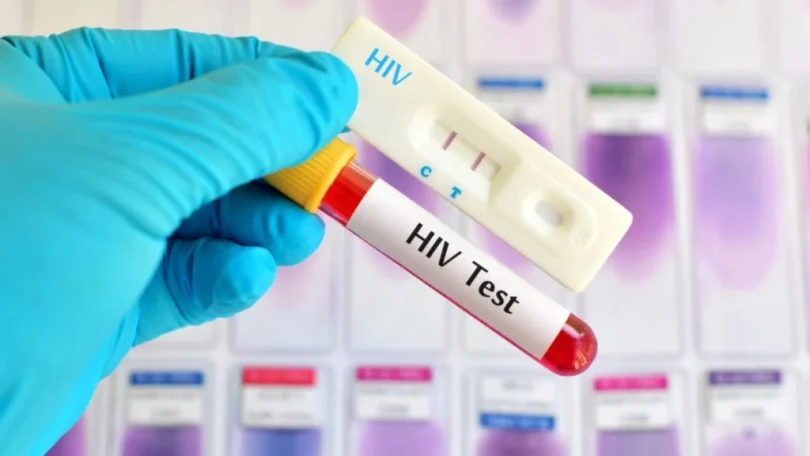
The global fight against HIV prevention is nearing a critical breaking point, with 3.3 million extra infections projected by 2030 if immediate steps are not taken to halt disruptions undermining existing programmes, the United Nations Population Fund (UNPF) cautioned on Monday.
The UN agency said sweeping funding reductions are exposing millions of people in high-risk communities to growing vulnerability, reversing long-standing gains made in lowering new HIV infections.
The warning was issued by UNFPA’s Executive Director, Diene Keita, during an official statement to mark the 2025 World AIDS Day, an annual global advocacy campaign led by the United Nations Population Fund.
Keita said the observance, themed “Overcoming disruption, transforming the AIDS response,” was a call to rebuild weakened systems and stabilise prevention networks strained by economic and political uncertainty.
“We’re at a crossroads,” she said, describing the current moment as decisive for global public health cooperation.
Despite breakthroughs in policy and health technology, Keita noted that everyday prevention services are reaching fewer people most in need, worsened by tightening resources around donor-supported healthcare.
She disclosed that nearly 2.5 million people have been cut off from crucial Pre-exposure Prophylaxis support, and worsened gaps are deepening inequalities for key vulnerable populations.
“Specifically, what happened in Guinea-Bissau was not a coup; maybe, for want of a better word, I would say it was a ceremonial coup,” she said earlier, underscoring her broader concern for democratic stability influencing health access across the region.
She also confirmed that 2.5 million individuals have had their access to PrEP disrupted, with 2024’s hardest-hit countries carrying half of last year’s recorded new HIV infections.
UNFPA said one group already bearing the brunt are young women in sub-Saharan Africa, where risks remain disproportionately high.
Keita revealed that adolescent girls and women aged 15 to 24 form 25 percent of new HIV infections in that region, hindered by social determinants such as stigma, violence, and gender inequality.
“HIV increases maternal mortality, restricts women’s rights and choices, and has profound consequences on families,” Keita said, reiterating that prevention is inextricably tied to national development outcomes.
“The absolute priority now is to get these rights, like day-one sick pay, into law so working people can start benefiting,” she said, urging that lawmakers take decisive steps to secure essential services through protected frameworks.
She further pressed for structural reforms that could improve access for historically marginalised groups, including legal protection for communities that avoid public health contact due to criminalisation.
Keita urged countries to decriminalise same-sex relations and sex work, calling it one of the fastest ways to widen prevention access for groups often shut out of mainstream healthcare.
“They cannot change those results. They should tally all those results and announce,” she said earlier in another context, warning that data transparency and public trust will determine whether global HIV efforts are stabilised or lost further.
In reaffirming commitment, Keita said UNFPA remains dedicated to scaling prevention and response for adolescent girls, young women, and high-exposure populations.
She noted the world has “already saved almost 27 million lives,” while broader global cooperation “will owe future generations the responsibility” of sustaining the push toward ending AIDS as a public health threat.
The 2025 World AIDS Day focus expands the long-standing objective of raising awareness and rebuilding momentum for infection reduction, a movement introduced in 1988 by the World Health Organisation.
The effort also aligns with World AIDS Day, originally launched in 1988, which honours lives lost and galvanises global policy, first convened under the World Health Organisation and continued today under the mandate of the United Nations Population Fund.