
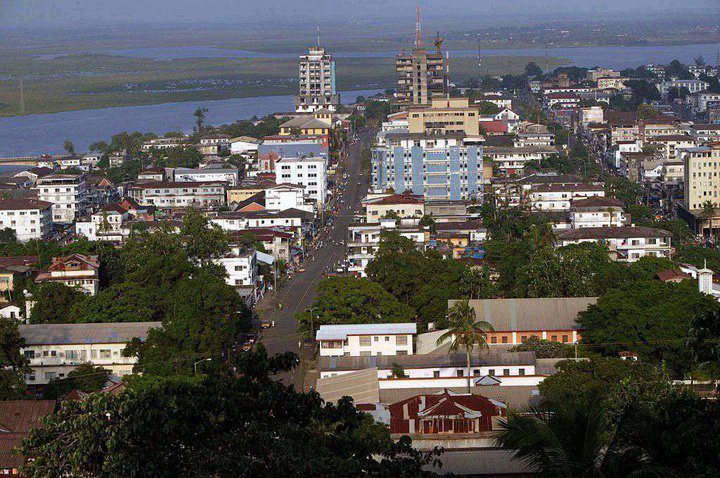
Some academics believe that Ethiopia and Liberia are the only two countries in Africa that have never been ruled by a colonial power. Liberia and Ethiopia are the only two countries in Africa that have maintained their independence. During their early histories, both Liberia and Ethiopia were subject to varying degrees of outside control for brief periods of time. The degree of this control varied from country to country. As a direct consequence of this, the topic of whether or not they genuinely remained totally independent over the entirety of their histories is one that is still open to debate.
Key Takeaways • It is generally accepted that Ethiopia and Liberia are the only two African countries that were never colonized by a European power. This is the case for both of these countries, but only Ethiopia was never colonized.
• Because of their geographical locations, the robustness of their economies, and their capacity to remain together, Ethiopia and Liberia were able to evade colonialism.
Ethiopia was officially acknowledged as an independent state by the international community in the same year that it achieved a resounding victory over invading Italian forces at the Battle of Adwa in 1896. The Italian government never made any attempt to establish colonial control over Ethiopia, despite the fact that it occupied the nation for a short period of time for military purposes during World War II.
• The United States founded Liberia in 1821 as a destination for its free Black residents, but the country was never colonized after it achieved full independence in 1847. • Liberia was established by the United States as a destination for its free Black residents. Despite the fact that Liberia wasn’t established until 1821, this is the case.
Between the years 1890 and 1914, a period of time referred to as the “scramble for Africa” took place. This period of time was marked by the rapid colonization of the majority of the African continent by European powers. By the year 1914, European nations controlled nearly 90 percent of the territory that made up Africa. On the other hand, Ethiopia and Liberia were not colonized because of their advantageous locations geographically, the success of their economies, and the consistency of their political systems.
What exactly does it imply to talk about “colonization”?
The act of discovering, attacking, and then permanently settling one political body on top of another is what is meant to be understood as the colonization process. It is a time-honored skill that was put to use during the Bronze and Iron Ages by the empires of Assyria, Persia, Greece, and Rome, not to mention the post colonial empires of the United States of America, Australia, New Zealand, and Canada.
The Western Colonization, on the other hand, is the one that academics consider to be the most comprehensive, the one that has been researched the most, and the one that may have been the most harmful of the colonial operations. This is a reference to the endeavors that were made by the maritime European nations of Portugal, Spain, the Dutch Republic, France, England, and finally Germany, Italy, and Belgium, to conquer the rest of the world. When World War II rolled around, two-fifths of the world’s land area and one-third of its population were living in colonies. This practice began in the late 15th century. Another third of the world’s landmass was subject to colonial rule in the past, but it is now occupied by nations that are sovereign in their own right. Because many of these newly independent nations were founded primarily by people who were descended from the original colonizers, the negative effects of Western colonization were never completely undone. This is because of the fact that many of these newly independent nations were descended from the original colonizers.
Never a Member of a Colony, Do You Understand?
Only a handful of countries, such as Turkey, Iran, China, and Japan, were able to avoid being absorbed by the huge force of Western colonization and maintain their independence. These nations are among those included: Additionally, nations that had been around for longer periods of time or that had reached higher levels of development before the year 1500 had a greater tendency to be colonized much later in time or not at all. This was due to the fact that these nations were more resistant to colonization. It appears that variables such as relative navigational distance from northwestern Europe and the lack of a safe overland approach to landlocked countries were important in determining whether or not a country was colonized by the West. In addition to that, it appears that the difficulty of entering the nation was a contributing factor. One might make the case that Liberia and Ethiopia were two of those African countries to watch out for.
Because they believed it would be detrimental to their economic well-being, the imperialistic European nations refrained from colonizing Liberia and Ethiopia in their entirety. This was because of the importance of these countries’ economies. These two African states were the only ones that the imperialistic European nations deemed to have a chance of becoming viable actors in the global economy based on commerce. However, in exchange for what seemed to be their “independence,” Liberia and Ethiopia were compelled to cede territory, consent to varying degrees of economic control exercised by Europe, and become participants in European spheres of influence. This was all done in exchange for what appeared to be their “independence.”
Ethiopia
Ethiopia, which was formerly known as Abyssinia, is one of the oldest countries in the world. In fact, it was once known as Abyssinia. The territory is referred to as the Kingdom of Axum in the King James Version of the Bible, and its history may be dated back to approximately 400 BCE. Together with Rome, Persia, and China, Axum was regarded as one of the era’s four major world powers. Because of the willingness of the people of Ethiopia, from farmers to kings, to come together as one, Ethiopia was able to secure decisive victories over a number of global colonialist forces over the course of its millennia-long history. These victories allowed Ethiopia to reclaim its independence from colonial rule. This, in addition to the geographical isolation of the country and its economic prosperity, was a contributing factor in Ethiopia’s success.
Despite the fact that Italy occupied Ethiopia from 1936 to 1941, the country is considered by some academics to have “never been colonized.” This is due to the fact that the occupation did not result in the installation of a permanent colonial authority in Ethiopia.
In 1895, Italy began an invasion of Ethiopia with the intention of growing the size of the vast colonial empire that it already possessed in Africa. During the subsequent First Italo-Ethiopian War (1895-1896), Ethiopian forces prevailed over Italian forces and won a decisive victory at the Battle of Adwa on March 1, 1896. This battle took place during the First Italo-Ethiopian War (1895-1896). On October 23, 1896, Italy signed the Treaty of Addis Ababa, thereby recognizing Ethiopia as an independent nation-state, which brought an end to the combat that had been going on since the previous day.
On October 3, 1935, Benito Mussolini, the dictator of Italy, issued the order to begin a second invasion of Ethiopia. This invasion was carried out under his orders. His desire to succeed stemmed from a desire to restore the prestige that had been tarnished for his nation as a direct result of the Battle of Adwa. On May 9, 1936, Italy officially annexed Ethiopia after a successful invasion and occupation of the country. On June 1 of that year, the country was one of three that were merged to form Africa Orientale Italiana. The other two countries were Algeria and Tunisia. Eritrea and Italian Somalia accounted for the remaining two (AOI or Italian East Africa).
On June 30, 1936, the Emperor of Ethiopia, Haile Selassie, made an impassioned appeal to the League of Nations for assistance in removing the Italians and re-establishing independence. He asked for assistance in both of these endeavors. Both the United States and Russia came around to his point of view, lending their support. Yet, a significant number of members of the League of Nations, such as the United Kingdom and France, admitted that Italy had colonized the territory.
The nation did not reclaim its independence until May 5, 1941, which was the day that Haile Selassie was reinstalled on the throne of Ethiopia. Prior to that date, the country remained a colony of Italy.
Liberia
The independent state of Liberia, which was not founded until 1847, is often referred to as having never been colonized. This is due to the fact that its establishment was relatively recent.
In the year 1821, the United States of America took possession of the area that would later become Liberia and ruled it for slightly more than 17 years until April 4, 1839, when they declared Liberia to be a commonwealth in an effort to achieve a level of independence. A true proclamation of independence wasn’t given until the 26th of July, 1847, eight years and one day later. In the middle of the 15th century, the area became known as the “Grain Coast,” and it retained this name all the way up until the late 17th century. This was due to the abundance of melegueta pepper grains in the area. During this time period, Portuguese, Dutch, and British merchants all kept successful trading operations in the region.
The American Society for Colonization of Free People of Color of the United States, more commonly known as the American Colonization Society or ACS, was a society that was initially directed by white Americans who were of the opinion that there was no room in the United States for free African-Americans. Another name for this organization is the American Society for Colonization of Free People of Color of the United States (American Society for Colonization of Free People of Color of the United States). They held the belief that the federal government ought to pay the bill for transporting free Blacks back to Africa, which eventually led to the takeover of the federal government by free Blacks. They believed that the federal government ought to pay the bill for transporting free Blacks back to Africa.
The American Colonization Society created the Cape Mesurado Colony on the Grain Coast on December 15th, 1821. This region was officially recognized as the Liberian Colony on August 15, 1824, which paved the way for subsequent territorial growth. By the time the 1840s rolled around, the colony had become a huge financial burden not only for the American Colonization Society but also for the government of the United States. Due to the fact that Liberia did not meet the requirements to be a sovereign state or a recognized colony of a sovereign state, the country was vulnerable to the political dangers posed by Britain. In addition, Liberia was subject to the economic dangers posed by Britain. The American Colonization Society ordered the publication of a proclamation of independence by the Liberians in the year 1846 as a direct result of this event. During the scramble for Africa that took place in the 1880s, the European nations shied away from Liberia because they continued to view it as an American colony. As a result of this, Liberia was left unconquered. Despite the fact that Liberia attained its complete independence the year after this event, it took place anyhow.
Nonetheless, there is a school of thought in the academic world that contends that Liberia ought to be categorized as a colony due to the fact that it was under the control of the United States for a period of 23 years prior to gaining independence in 1847.
... Here are Countries in Africa Considered Never Colonized (Opinion) ... Sportify Post.