
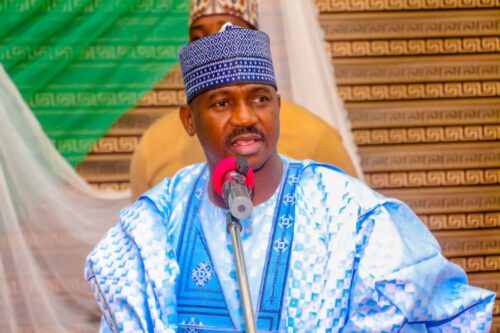
Education in Sokoto State has long existed at the intersection of aspiration and limitation. For decades, public classrooms across the state have struggled to bridge the widening gap between a rapidly growing population and the limited resources devoted to shaping their future. In many communities, parents have watched their children learn in crumbling structures, sit on bare floors, share outdated textbooks, or study under teachers whose morale has been worn down by years of neglect. Against this backdrop, Governor Ahmed Aliyu’s decision to allocate about 25 percent of the 2025 budget to the education sector is more than a fiscal gesture. It is an attempt to redefine what the state prioritizes and an acknowledgement that human capital must become the foundation of its long-term development strategy.
What makes this allocation noteworthy is not merely the percentage itself, but what it signals. In northern Nigeria, education has long been dogged by the lingering effects of historical underinvestment, demographic pressures, cultural complexities, and structural weaknesses. Many state budgets struggle to keep pace with the sheer scale of need. Allocating nearly a quarter of public expenditure to education in such an environment is bold; it reflects an understanding that Sokoto cannot progress unless the quality of its schools and teachers changes decisively. It is also a source of cautious optimism, suggesting an attempt to match rhetoric with actual commitment.
The scale of what needs fixing is massive. Many public schools still operate in conditions that would be unthinkable in other parts of the world: roofs that leak during the rainy season, classrooms without doors or windows, schools without functional toilets, and teachers working with outdated or insufficient teaching materials. For years, tertiary institutions across the state—from colleges of education to professional institutes—have grappled with accreditation challenges that limited their ability to expand programmes or maintain academic standards. These weaknesses collectively limit the pipeline of qualified teachers, health workers, engineers, and technical professionals the state needs.
The 2025 budget attempts to reverse some of these trends by focusing heavily on infrastructure restoration. Large sums are earmarked for renovating classrooms, constructing new school blocks, installing digital learning facilities, upgrading workshops and laboratories, and replacing worn-out furniture. Several schools damaged by age or environmental factors are also slated for full rehabilitation. Government officials argue that this is part of a structured, multi-year plan rather than a one-off spending spree. In a number of local government areas, students are already attending refurbished blocks with restored electricity and improved water supply—early signals of what a properly funded education system could begin to look like.
But infrastructure alone cannot repair an education system. Teachers remain the heart of any serious reform, and in Sokoto, they have faced some of the toughest conditions. For years, many worked without timely promotions, with limited access to training, and often with salaries that neither reflected their workload nor the importance of their profession. Unsurprisingly, some left for federal agencies, private schools, or even non-education jobs. This has contributed to chronic shortages in science subjects, technical fields, and rural schools.
Governor Aliyu’s plan attempts to address this by increasing teacher pay, clearing backlogs in promotion processes, and expanding opportunities for professional development. Pilot training sessions already launched in clusters across the state indicate growing enthusiasm. Teachers have reported better attendance, increased engagement, and a renewed sense of professional purpose. For many, the recognition that the state is paying attention after years of indifference is an important morale boost. The governor’s frequent reminder that “no education system can rise above the quality of its teachers” captures an important truth: infrastructure is necessary, but not sufficient.
At the tertiary level, the administration is also attempting to repair longstanding accreditation problems. Sokoto’s colleges of education, polytechnics, and technical institutes play a crucial role in workforce development, especially in fields like agriculture, health, engineering, and teacher training. However, outdated laboratories, inadequate libraries, and insufficient staffing have repeatedly triggered accreditation setbacks. The new funding will be used to modernize facilities, purchase updated equipment, and support compliance with regulatory standards. Several accreditation teams are expected to visit institutions in the coming months, raising hope that the state will regain lost ground and expand academic offerings. A stronger tertiary sector would not only produce better graduates but also elevate the state’s academic reputation.
The focus on education is also fundamentally linked to Sokoto’s broader economic goals. The state has ambitions to modernize its agricultural value chains—from rice mills to tomato processing facilities—and to stimulate small-scale industry, renewable energy, and service-sector growth. Yet every one of these sectors depends on the availability of a skilled, adaptable workforce. Without strong foundational education, investments in agriculture or industry will be limited by skill shortages, low productivity, and weak innovation capacity. The education budget, therefore, is as much an economic blueprint as a social investment. It is the state’s attempt to reposition itself for competitiveness in a rapidly evolving regional and global landscape.
Yet, the challenges ahead cannot be ignored. One of the most significant is the issue of absorptive capacity—the ability of ministries, schools, and agencies to execute projects effectively within a single fiscal year. Historically, public institutions in the state have struggled with delays, incomplete projects, and bureaucratic bottlenecks. This raises a familiar question: can the system efficiently translate a large allocation into visible results? The administration says it is addressing this by setting up monitoring teams within the Ministry of Education, adopting digital procurement systems, and improving inter-agency coordination. These reforms, if sustained, could strengthen transparency and reduce the risk of waste.
Corruption remains another persistent concern. Previous oversight mechanisms have sometimes failed to prevent inflated contracts, substandard construction, or the quiet disappearance of funds. The current administration has pledged to adopt more transparent procurement procedures, publish major contract details, and involve community monitoring groups in project supervision. Civil society organizations have welcomed the initial openness but continue to push for stronger independent oversight. Supporters of the administration cite recent cancellations of questionable contracts as evidence that the government is serious about accountability. Whether this momentum is sustained will be critical as the sector begins to absorb more funds.
Teacher retention also poses a long-term challenge. Even with improved pay, Sokoto competes with opportunities in other states, federal positions, and private institutions. Attracting and retaining quality educators—especially in rural areas—will require continuous incentives such as rural allowances, better housing, stronger security, and career progression pathways. Without tackling these structural issues, improved training alone may not prevent outflow.
A final concern is the sustainability of funding. Sokoto currently benefits from external support, including donor-funded programmes for girls’ education, early childhood learning, and teacher training. These partnerships have amplified state investments, but they cannot be counted on indefinitely. Economic volatility, donor fatigue, or shifting political priorities could disrupt them. The administration’s plan to expand internally generated revenue, encourage private contributions through education endowment funds, and diversify the state’s revenue base indicates awareness of this risk. But these efforts will take time to mature.
Despite these challenges, the direction of policy is clear. Sokoto’s future depends on its people, and the decision to allocate 25 percent of the budget to education represents a serious—perhaps historic—attempt to rebuild the state’s foundation. One year will not solve a decade of decay, and a budget line will not repair every failing school overnight. But the early signs—from construction sites to training centres—suggest that progress is possible when political will is matched by resources and a coherent plan.
Ultimately, the success of this effort will not be measured by the eloquence of budget speeches or the number of groundbreaking ceremonies. It will be measured by improvements in literacy, numeracy, examination outcomes, attendance rates, teacher satisfaction, and the employability of graduates. If the administration sustains its momentum, strengthens oversight, and keeps its focus on long-term institutional reforms, the 2025 budget could mark a turning point in the educational history of Sokoto.
The coming years will determine whether this moment becomes a genuine transformation—or another missed opportunity. For now, the state appears to have made the right choice: investing in its people, betting on its future, and recognizing that no society rises beyond the quality of the education it provides.
feel comfortable.” Her words capture the essence of this moment: education reforms are ultimately about the futures of children who only need a fair chance.
Sokoto now stands at a threshold. If the Governor Aliyu administration sustains its momentum, strengthens oversight, and remains committed to long-term reform, the investment of 2024, and 2025 budgets would mark a turning point in the state’s educational history. But if resolve weakens, this moment may dissolve into the long list of missed opportunities.
For now, the state has taken a necessary step—choosing to invest in its people, strengthen its institutions, and bet on a future in which every child can learn with dignity. Whether that promise is fully realized will define the next chapter of Sokoto’s story.