
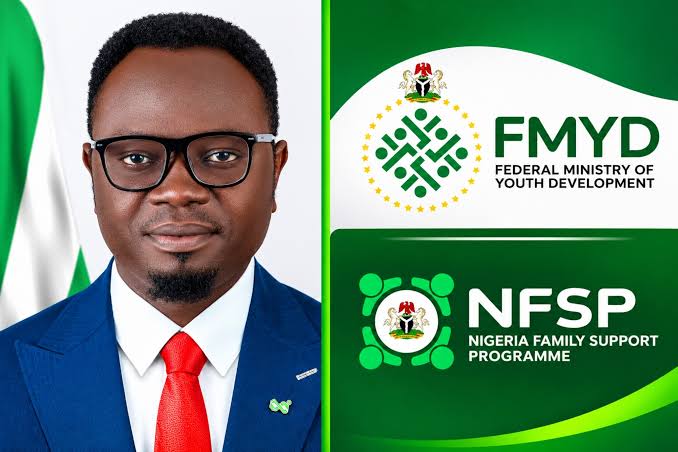
The Federal Ministry of Youth Development (FMYD) has issued a public disclaimer distancing itself from the viral Nigeria Family Strengthening and Development Programme (NFSP), warning Nigerians against registering on the website advertising financial assistance under the initiative.
In a public statement, the ministry described the website, nfsp.ng, as fraudulent, stressing that it is neither affiliated with, authorised nor operated by the Federal Ministry of Youth Development.
The ministry urged members of the public to avoid visiting or registering on the platform, uploading personal documents or providing sensitive information, including bank details, passwords, Personal Identification Numbers (PINs) and One-Time Passwords (OTPs).
It also advised Nigerians to verify information about government programmes through officially recognised communication channels before submitting personal information or participating in any advertised financial assistance scheme.
How the NFSP Programme Became Viral
The warning comes after the NFSP website and its advertised ₦100,000 family support grant attracted widespread attention across social media and online news platforms.
The programme was presented as a social intervention designed to provide financial assistance to vulnerable Nigerian households facing economic hardship.
Its website advertised a ₦100,000 cash grant and invited interested Nigerians to register through an online portal. The registration process reportedly requested personal information, including applicants’ names, National Identification Numbers (NIN), family details, employment information and supporting documents.
The advertised initiative generated interest among Nigerians seeking financial support, with several online publications sharing information about its purported eligibility requirements and registration process.
As the website circulated, questions also emerged about its official status and whether the Federal Government had authorised the programme.
The ministry’s latest disclaimer has now clarified that it does not recognise or operate the website.
What the Ministry Is Telling Nigerians
Following the disclaimer, the Federal Ministry of Youth Development advised Nigerians to take the following precautions:
- Avoid visiting or registering on nfsp.ng.
- Do not upload personal documents or submit sensitive information through the website.
- Never disclose bank details, passwords, PINs or OTPs.
- Confirm government programmes through the ministry’s recognised communication channels before participating.
The warning is particularly important for individuals who may have already submitted personal information through the portal.
Such individuals should avoid providing additional information or responding to suspicious calls and messages requesting banking credentials or verification codes.
Anyone who disclosed sensitive banking information should contact their financial institution for guidance on securing their account and monitoring suspicious transactions.
What Happens to Nigerians Who Have Already Registered?
The ministry’s disclaimer raises concerns for Nigerians who may have completed the registration process before the warning was issued.
Although the statement advises the public against using the website, it does not provide details on how information previously submitted through the platform will be handled or whether affected applicants will receive further guidance.
It also does not announce an alternative registration portal for the advertised NFSP grant.
Nigerians who encounter similar financial assistance announcements should therefore confirm their authenticity directly through the responsible government agency before submitting their personal information.
Why the Disclaimer Matters
The development highlights the importance of verifying online grant announcements, particularly those promising direct financial assistance to individuals and households.
Government-backed intervention programmes often attract significant public interest, especially among Nigerians seeking support for household expenses, business activities and other financial needs.
However, the circulation of a registration link or its publication by online platforms does not automatically establish that a programme has received government approval.
The Federal Ministry of Youth Development has therefore urged Nigerians to rely on its recognised communication channels for accurate information about its programmes and interventions.