The Federal Government has called for greater responsibility in the use of language in security operations, media reporting, and public discourse, warning that careless or inaccurate definitions can deepen divisions and undermine national unity.
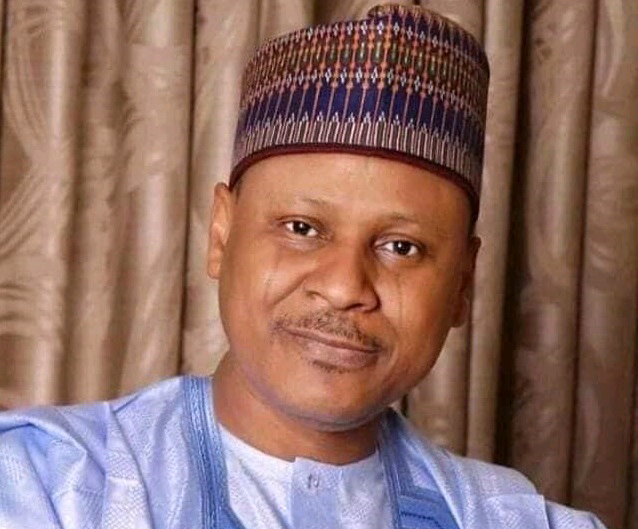
The Honourable Minister of Information and National Orientation, Mohammed Idris, made this known at a high-level conference organised by Whiteink Institute for Strategy Education and Research Nigeria (WISER), on “Contextualising Definitions and Terminologies to Address Stereotyping and Ethnic Profiling in Discourses and Security Operations in West Africa”. The Minister was represented by the Executive Secretary of the Nigerian Press Council (NPC), Dr. Dili Ezughah.
“Definitions are not neutral. They carry weight. They influence how communities are seen and how they are treated,” the Minister stated.
“When definitions are careless or inaccurate, they can reinforce stereotypes, deepen divisions and create mistrust between citizens and the institutions meant to protect them,” he added.
The Minister emphasized that Nigeria’s diversity requires careful, responsible, and context-driven communication, particularly in addressing security challenges. He warned against attaching criminal activities to ethnic or religious identities, noting that such narratives could undermine trust and cooperation.
“We must promote accuracy in language. We must also ensure that individuals are held accountable for their actions without generalizing blame to entire groups,” he said.
“We must distinguish clearly between criminal behavior and identity.”
Idris highlighted ongoing efforts by the Federal Government under the leadership of President Bola Ahmed Tinubu to strengthen unity and rebuild trust between citizens and institutions. He pointed to the National Values Charter as a key initiative designed to promote accountability, inclusion, and shared responsibility.
“The charter provides a clear framework outlining the government’s responsibilities to citizens and citizens’ responsibilities to the nation,” he said. “Its purpose is simple, to rebuild trust and create a common understanding of what it means to be Nigerian.”
He noted that the National Orientation Agency is driving nationwide campaigns to promote responsible citizenship, counter harmful narratives, and foster unity, while the Citizens’ Engagement initiatives are deepening the relationship between government and the people.
On security, the Minister reaffirmed that the Federal Government is strengthening Nigeria’s security architecture to tackle evolving threats such as terrorism, banditry, and organized crime. He disclosed that a comprehensive framework for a phased transition to state policing has been developed.
“A comprehensive framework… proposes a carefully phased transition to a decentralized policing system over a 60-month period,” he said, adding that “strong safeguards have been embedded to prevent political misuse.”
Idris also highlighted Nigeria’s continued collaboration with international partners in intelligence sharing, capacity building, and counter-terrorism, while cautioning against misrepresentation of the country in global narratives.
“While challenges exist, they do not define our country. Nigeria remains a place where different religious groups coexist… and where government continues to take steps to strengthen inclusion and fairness,” he affirmed.
The Minister called on media practitioners to uphold professionalism and responsibility, especially in the digital age where information spreads rapidly.
“Reporting must be responsible, verified and sensitive to context. The consequences of misinformation or careless framing can be severe,” he said.
He further stressed the need for stronger regional cooperation across West Africa to promote responsible communication frameworks that support security and social cohesion.
The Minister concluded by reiterating that security goes beyond physical protection and must be anchored on trust, fairness, and shared values.
“Security is not only about protecting territory. It is about protecting people, their dignity and their sense of belonging,” he said.
“That trust begins with fairness, in action, in policy, and in language.”
FG Pushes for Responsible Language in Security Reporting, Warns Against Harmful Labels – Idris