
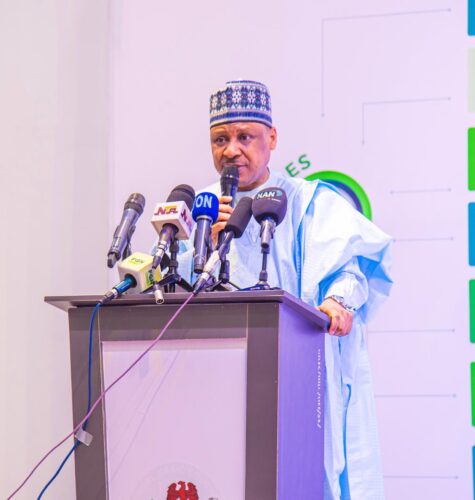
The Federal Government has announced a new approach to public communication, shifting from reliance on periodic press briefings to direct, structured engagement with service-delivery ministries to ensure Nigerians clearly understand ongoing reforms and their benefits.
This was disclosed by the Honourable Minister of Information and National Orientation, Mohammed Idris, during a strategic visit to the Federal Ministry of Health and Social Welfare, held Wednesday, as part of efforts to deepen the delivery of President Bola Ahmed Tinubu’s Renewed Hope Agenda.
Welcoming the delegation, the Permanent Secretary of the Federal Ministry of Health and Social Welfare, Daju Kachollom S., mni, described the visit as timely and strategic, noting that effective communication is central to the success of reforms in the health sector. She said the Ministry has recorded notable progress over the past two years but stressed that these achievements must be clearly communicated to Nigerians to enhance trust, utilisation, and public confidence.
Idris explained that his Ministry is deliberately engaging key service-delivery ministries to ensure government actions are effectively communicated to citizens. According to him, governance is incomplete without communication, stressing that “what is not communicated is often assumed not to have happened.”
He commended the leadership of the Ministry of Health and Social Welfare for prioritising disease prevention, primary healthcare revitalisation, medical industrialisation, expansion of cancer care services, and reduction of medical tourism, noting that these reforms have direct and lasting impact on the lives and productivity of Nigerians. He assured that the Ministry of Information would deploy its platforms and agencies to amplify health sector reforms, promote preventive health awareness, and ensure accurate dissemination of information nationwide.
The Coordinating Minister of Health and Social Welfare, Professor Muhammad Ali Pate, said President Bola Ahmed Tinubu placed health at the centre of the Renewed Hope Agenda because a healthy population is fundamental to national development and economic growth. He explained that the Ministry’s Health Sector Renewal Investment Initiative is focused on strengthening governance, expanding quality healthcare services, boosting local pharmaceutical manufacturing, improving health security, and ensuring equitable access to care.
Professor Pate highlighted progress in primary healthcare revitalisation, immunisation coverage, disease outbreak prevention, cancer treatment expansion, and health insurance enrolment, noting that many successes in the health sector are measured by crises prevented rather than emergencies managed. He emphasised that effective communication plays a critical role in helping citizens understand preventive healthcare and government investments.
Also speaking, the Minister of State for Health and Social Welfare, Dr Iziaq Adekunle Salako, said the alignment between the Renewed Hope Agenda and the Health Sector Renewal Blueprint has provided clarity and direction for reforms. He outlined improvements in digital health deployment, power supply to health facilities, workforce management, and reduction of industrial disputes through constructive engagement.
Dr Salako noted that Nigeria now has the capacity to manage many medical conditions locally, particularly in cancer care, reducing the need for medical tourism while attracting patients from neighbouring countries. He stressed the importance of sustained media engagement in building public trust and supporting national development.
The visit concluded with a shared commitment by both ministries to institutionalise collaboration, strengthen public awareness, and ensure Nigerians fully understand, access, and benefit from ongoing health sector reforms in line with President Bola Ahmed Tinubu’s Renewed Hope Agenda.