
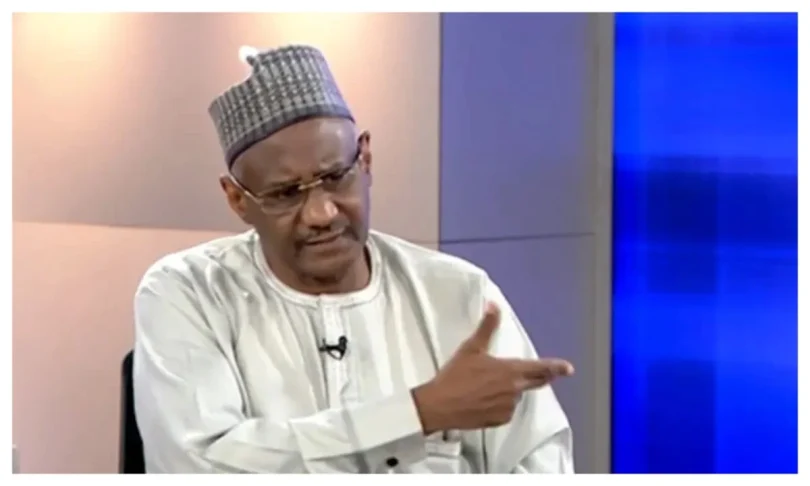
Professor Yusuf Usman, former chairman of the National Health Insurance Scheme (NHIS), has urged voters in northern Nigeria to learn from the recent political developments in Osun State and recognise the power of their votes in determining the leadership of the country.
Usman made the remarks during an interview with DCL on Wednesday, where he criticised alleged vote-buying, the deployment of security personnel during elections and the use of religious sentiments for political mobilisation.
He said more than 30,000 security personnel were deployed to Osun State during the election, describing the deployment as excessive and an attempt to intimidate voters.
“They sent over 30,000 security agents to Osun State to intimidate people. 30,000. If you sent 30,000 to Zamfara, all the insecurity in Zamfara will be gone,” Usman said.
He questioned why such a large number of security personnel could be deployed for an election while insecurity continues to affect parts of northern Nigeria.
“But no, the people, the lives of our people, are not as important as you rigging the ballot election,” he said.
According to him, the people of Osun State were not intimidated by the security presence and still exercised their right to vote.
“In spite of that, the people of Osun were not intimidated by the presence of security agents in their state; they were there to help them vote,” Usman said.
The former NHIS chairman also accused politicians of spending billions of public money to influence voters during elections.
“Number two, they spend billions of our money, people’s money, to buy votes. Yes, people receive the money,” he said.
Usman urged voters in the north to compare the short-term benefits offered during elections with the long-term consequences of their political choices.
“And our voters in the north, the lesson you need to learn from Osun is whereas in Osun they gave them N30,000, N40,000, N50,000, here in the north they give you N500 and noodles to grab your lives for the next four years,” he said.
Usman said northern voters should understand that they have the power to determine who governs them through the ballot.
“We have a lot to learn in the north to tell you that we have the power. We vote this government in. We have the power to choose whoever we want to choose,” he said.
He also criticised the continued use of religious arguments to mobilise voters, particularly calls for support for a Muslim-Muslim political ticket.
“And now they are bringing in these religious leaders back to you again to tell you to vote Muslim-Muslim, which I said from the outset was nothing but a scam. Nothing to do with Islam,” he said.
According to him, religious identity should not be used as a substitute for effective governance and addressing the challenges confronting Nigerians.
“It is just to scoop votes for him. After that, what happened in the last four years? What happened to Muslims in the north?” he asked.
Usman said poverty, insecurity, drug abuse, hunger and the number of out-of-school children remained major challenges in northern Nigeria.
“Our poverty has been deepened. Many more children are out of school, over 20,000 are out of school. Insecurity is worse, drugs all over,” he said.
He further argued that the country’s security challenges could not be resolved through military hardware alone without addressing the underlying social and economic problems.
“And I tell the military, you can buy a billion rockets, a billion whatever to Kano jets. You cannot solve this problem. You don’t solve this social problem,” Usman said.
The former NHIS chairman also called on religious leaders to focus more on addressing social problems and holding political leaders accountable rather than supporting political campaigns.
“Instead of our religious leaders focusing on solving the social problems and telling our leadership to solve these social problems now, they are getting pittance and selling the same bandwagon of Muslim-Muslim scam,” he said.
Usman concluded by distancing himself from religious leaders whom he accused of using Islam for political purposes.
“This is not my Islam, they are not representing me, they are not representing hundreds of millions of Muslims in Nigeria. That’s all I have to say. Islam is better than they are,” he said.