
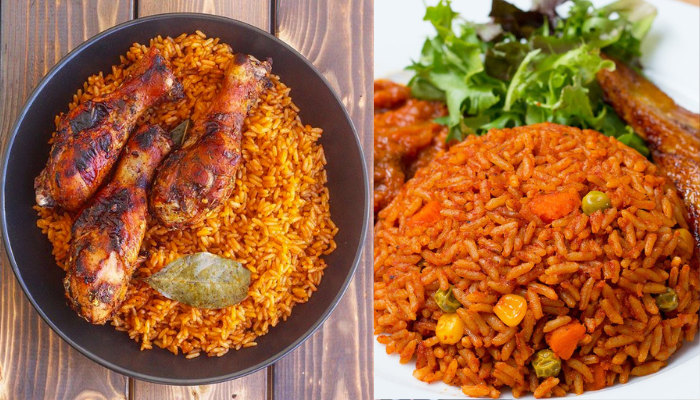
The cost of preparing Nigeria’s iconic jollof rice has surged by more than 400 percent across every region of the country over the past decade, underscoring how insecurity, climate change, poor infrastructure, and persistent inflation have fundamentally reshaped household food consumption.
The latest SBM Jollof Index Q2 2026 shows that while headline inflation has moderated from its 2024 peaks, the cost of cooking one of Nigeria’s most popular meals continues to climb, revealing deep structural problems in the country’s food system rather than temporary price pressures.
Since SBM Intelligence began tracking the index in 2016, no region has escaped steep increases in food costs. The Southwest recorded the highest increase at 708.2 percent, followed by Northcentral (567.3 percent), South-South (489.9 percent), Northeast (467.5 percent), Southeast (441.3 percent) and Northwest (428 percent).
The report argues that the rising cost of a pot of jollof has become one of the clearest indicators of the pressure facing Nigerian households, reflecting not just food inflation but also broader economic weaknesses, including foreign exchange volatility, insecurity in farming communities, rising logistics costs, and worsening climate-related disruptions.
SBM noted that what was once viewed largely as an inflation story has evolved into a structural food security challenge.
“The jollof pot remains West Africa’s most honest economic barometer,” the report stated. “It reveals not just prices, but priorities, substitutions, and the quiet resilience of households who make do with less.”
The decade-long trajectory illustrates how successive economic shocks have compounded each other. Between 2016 and 2020, food prices increased at a relatively moderate pace. The period from 2021 to 2023 saw inflation accelerate as insecurity reduced agricultural output, while naira depreciation raised import costs.
Since 2024, however, the removal of petrol subsidies, exchange-rate reforms, higher transportation costs, and extreme weather events have pushed food prices into what SBM described as a hyperinflationary phase.
The report also highlights climate change as an increasingly important driver of food inflation. Heavy rains, flooding, delayed planting seasons, and pest infestations disrupted agricultural production across major food-producing states during the second quarter of 2026.
“Tomatoes and peppers were among the hardest-hit crops, with shortages reported nationwide as flooded roads delayed transportation and increased logistics costs. In Bauchi, tomato prices reportedly surged by more than 200 percent in some markets, while traders across Lagos, Port Harcourt, Calabar, Kano, and Abuja reported persistent supply shortages,” it said.
Consumers are increasingly adapting by replacing fresh tomatoes with tomato paste, dried peppers, or carrot-based sauces, while many households have abandoned bulk buying altogether in favour of purchasing ingredients in smaller quantities as incomes fail to keep pace with rising food prices.
The report also found that protein has become the biggest contributor to rising cooking costs. Nigerians are increasingly substituting turkey with chicken, while many households now purchase meat in smaller portions or individual cuts instead of by weight.
Food costs climbed sharply over the past year
Although the decade-long trend remains alarming, the report shows food inflation continued to worsen over the last 12 months.
The national average cost of cooking a pot of jollof increased from N25,798 in July 2025 to N29,578 in June 2026, representing a 14.6 percent year-on-year increase. The rise followed temporary price moderation during the 2025 harvest season before accelerating again from late 2025 through the first half of 2026.
Price increases varied widely across regions. Lagos recorded the steepest increase among major markets, with Trade Fair and Balogun markets posting a 49.6 percent increase over the year as imported food costs, transport expenses, and weather disruptions combined to push prices higher.
In the South-South, Calabar Municipal climbed 36.3 percent, and Bayside Mbakpa rose 35.9 percent, while Port Harcourt recorded an 18.2 percent increase.
Bauchi was one of the few exceptions, with prices declining 16.7 percent from exceptionally high 2025 levels following improved harvests and better supply conditions, although prices remain significantly higher than historical averages.
The report also reveals widening disparities across Nigerian cities. Calabar Municipal emerged as Nigeria’s most expensive market for cooking jollof at N34,750, while Awka remained the cheapest at N22,050, creating a price gap of ₦12,700 between both locations.
According to SBM, these regional differences demonstrate that Nigeria no longer faces a single national food inflation problem but rather a collection of localised crises shaped by insecurity, weather conditions, infrastructure deficits, and transport bottlenecks.
Nigeria, Ghana close the gap—but for the wrong reasons
The report also compared food affordability between Nigeria and Ghana, finding that the long-standing gap between both countries has narrowed considerably.
Nigeria’s national average Jollof Index stood at N29,578 in June 2026, equivalent to approximately $22.75, while Ghana’s national average of GHS399 translated to about $22.17.
For the first time in years, the dollar cost of preparing a pot of jollof is almost identical in both countries.
However, SBM cautioned that the convergence should not be interpreted as evidence of improving affordability in Nigeria.
Instead, the narrowing reflects Ghana’s own inflationary pressures and currency depreciation, while Nigerian food prices have continued their upward trajectory.
“Unlike Nigeria, Ghana’s Jollof Index actually declined over the past year. Accra’s index fell 2.9 percent to GHS408, while Kumasi recorded a 3.7 percent decline to GHS390, supported by improved logistics, a relatively stable cedi and easing global grain prices,” the report disclosed.
Nevertheless, SBM warned that Ghana remains vulnerable because of its dependence on imported rice and vegetable oil, meaning future global commodity shocks could quickly reverse recent gains.