
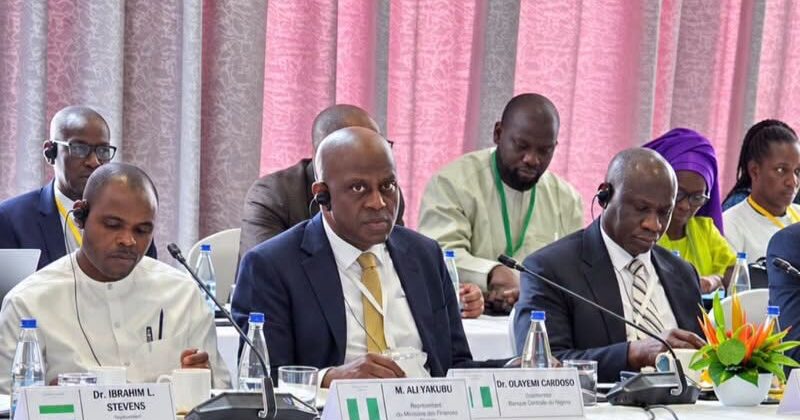
The Governor of the Central Bank of Nigeria (CBN), Mr. Olayemi Cardoso, has called for equity, fairness and proportional representation in the governance structure of the proposed ECOWAS Monetary Union.
He stressed that member states’ financial commitments must be matched by meaningful participation in decision-making.
Speaking on Friday, November 20, 2026, in Abidjan, Côte d’Ivoire, at the 6th Presidential Task Force Meeting on the ECOWAS Single Currency Programme, Governor Cardoso emphasised the importance of building a credible, sustainable and inclusive monetary union.
“The decisions we take today will shape the future of the Union for decades to come. They will influence its credibility in the eyes of investors and development partners, its legitimacy in the eyes of our citizens, and the confidence of Member States that their commitments are being matched by a meaningful voice within the institutions they are helping to build,” Olayemi Cardoso said.
Reaffirming Nigeria’s commitment to regional integration, he stated: “Nigeria has and will continue to demonstrate solidarity and fairness, respecting the sovereignty of other member states. We remain fully committed to the successful establishment of the ECO and to a Monetary Union that is credible, sustainable and beneficial to all Member States.”
Governor Cardoso further highlighted the need for governance structures that reflect both responsibility and contribution:
“While bigger economies continue to take up the burden, they should also be considered to play a significant role because of the risk and systemic importance they have in the sub-region.
“Above all, such economies need to defend the huge contribution they make before their respective parliaments and the civil society. Where obligations are shared but influence is not, arrangements may be agreed, but their long-term sustainability may be difficult to guarantee.”
He emphasised that Nigeria’s position is not rooted in dominance or entitlement, but in responsibility as the region’s largest economy and one of the principal contributors to the proposed Union.