
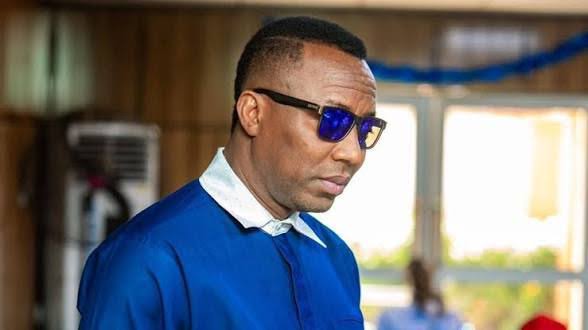
Omoyele Sowore is pressing Nigeria to legalise cannabis, arguing that a regulated trade would fill government coffers far better than the current approach of arrests, farm destruction and prosecutions.
The African Action Congress presidential candidate made the case in a Tuesday post on X, pointing to the money Canada and some US states collect from cannabis taxes and sales.
He said Nigeria was bleeding revenue while its authorities kept treating the plant as a criminal commodity.
He wrote: “Since 2018, I have advocated cannabis legalisation, arguing that Nigeria should stop criminalising an economically valuable plant and develop a properly regulated cannabis industry.
“While Nigerian authorities continue to arrest citizens, destroy cannabis farms, and criminalise the plant, countries that have legalised and regulated cannabis are collecting substantial government revenue.”
For the 2023-2024 fiscal year, Sowore said Canada pulled in about CA$2.2bn in government revenue from recreational cannabis.
He also pointed to roughly $1.067bn in cannabis tax revenue in California in 2024 and $255.4m in marijuana taxes and fees in Colorado that same year.
Statistics Canada put federal and provincial earnings from recreational cannabis at CA$2.2bn for the fiscal year ending March 31, 2024, covering income from cannabis authorities, excise duties, retail sales taxes, other specific taxes and licensing fees.
California’s tax authority reported about $1.067bn in cannabis tax revenue for 2024, while Colorado’s Department of Revenue logged $255.36m in marijuana tax and fee collections.
Sowore estimated that Nigeria could earn between $550m and $2.2bn a year under different scenarios, depending on how large a legal market becomes and how effectively it is taxed and regulated.
At an illustrative rate of N1,300 to the dollar, that would translate to between N715bn and N2.86tn annually.
He was careful to note that the numbers are hypothetical, and that actual earnings would hinge on market size, taxation, licensing, exports and regulatory capacity.
Also Read: Dennis Osadebay University hosts Airline CEO, Akande, for 6th Orientation Lecture
The activist also argued that legalisation could open jobs in agriculture, pharmaceutical manufacturing and industrial hemp, while supporting research and export income.
He called for a legal framework to regulate production, protect public health, support farmers and generate revenue.
Cannabis remains outlawed in Nigeria under the Indian Hemp Act, which bans its cultivation, unlawful importation, sale, exportation, smoking and possession, and defines Indian hemp to include plants and parts of plants of the cannabis genus.
The National Agency for Food and Drug Administration and Control has also said cultivation, consumption, handling and possession remain illegal under Nigerian law.
Sowore has campaigned for legalisation since 2018, arguing that Nigeria should explore the plant’s economic potential through a regulated industry.