
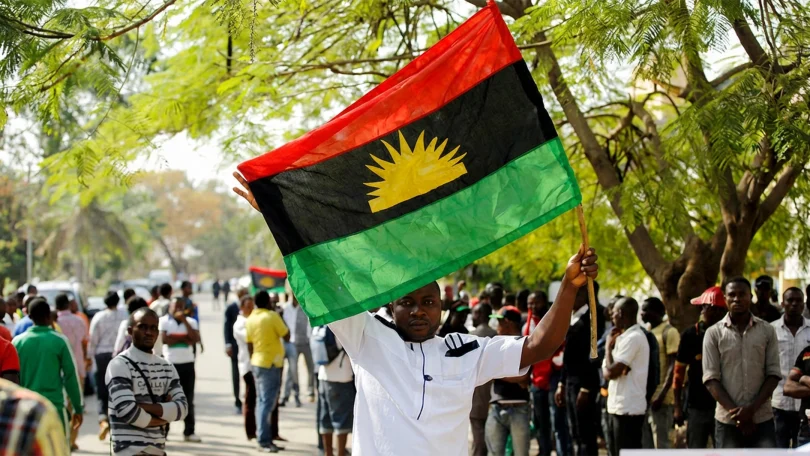
A pro-Biafra group, the Biafra Republic Government in Exile (BRGIE), has announced a policy offering automatic citizenship to Christians from Northern and Middle Belt Nigeria who may seek refuge in Biafra if it attains independence.
The group disclosed this in a statement issued Wednesday by its Prime Minister, Ogechukwu Nkere, following the passage of what it described as the “BRGIE Policy of Support for Persecuted Christians in Northern and Middle Belt Nigeria.”
According to the statement, the said legislation provides that Christians who claim persecution in Northern and Middle Belt states would qualify for automatic citizenship in a future independent Biafra.
The group said the measure was designed to address concerns about insecurity and alleged religious persecution in parts of the country.
Nkere stated that while the idea had previously been referenced by the leader of the Indigenous People of Biafra, Nnamdi Kanu, it had now been formally codified into BRGIE’s policy framework.
The group said: “This legislation establishes a formal policy under which BRGIE, upon the attainment of Biafran independence, will provide safe haven to Christians from Northern Nigeria who seek refuge in Biafra. The policy includes the granting of automatic Biafran citizenship to such individuals upon independence.
“While Mazi Nnamdi Kanu previously referenced this concept informally, BRGIE has now codified the principle into official policy and law. In a manner analogous to how Israel serves as a homeland and refuge for Jewish people worldwide, an independent Biafra would serve as a safe haven for Christians in West Africa.
“The legislation further articulates a policy of support for Christian communities in Nigeria’s Middle Belt through political engagement, humanitarian assistance, and lawful defensive cooperation.
“This framework envisions the development of strategic partnerships aimed at strengthening community self-defence capacity and countering extremist threats, including Boko Haram and the Islamic State West Africa Province (ISWAP), in full compliance with international law and human rights standards.
BRGIE said the policy was adopted after consultations and encouragement from intentional partners, adding that it was intended to demonstrate institutional preparedness in the event of any future political transition.
The disclosure comes amid renewed international attention on religious violence in Nigeria.
President Trump, after designating Nigeria as a country of concern over an alleged persecution of Christians, had ordered airstrikes against terrorists in Sokoto, Northern Nigeria, on December 26, 2026.
Recently, U.S. lawmaker Riley Moore presented a report on the persecution of Christians in Nigeria to former President Donald Trump following a fact-finding visit to the country.
Nigeria has continued to grapple with insurgency and banditry in parts of the North-East and North-West, with both Christian and Muslim communities affected by the violence.
The Federal Government has consistently maintained that it is addressing insecurity through military operations and broader security reforms, while rejecting claims that the crisis amounts to state-backed religious persecution.See_More…