
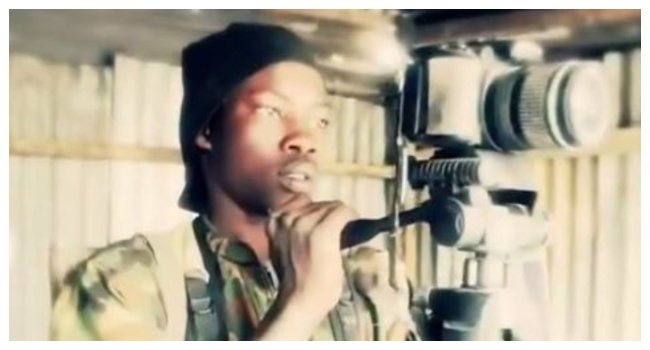
Imagine this. A military operation takes place somewhere in the forests of Borno State. Gunfire echoes through the night. By morning, the smoke has cleared, weapons have been recovered, and bodies lie scattered across the battlefield.
Then the military announces something unusual.
Not just that commanders were killed.
Not just that fighters were eliminated.
But that among the dead were members of the terrorists’ media team.
Wait…
Media team?
Terrorists have photographers?
Cameramen?
People whose job is to record videos instead of carrying rifles?
It sounds strange at first. Almost unbelievable.
Yet it also reveals one of the least discussed realities of modern terrorism.
Today’s terrorist organisations don’t only fight with bullets.
They fight with cameras.
They fight with edited videos.
They fight with carefully crafted narratives.
And in many cases, those weapons travel farther than AK-47s ever can.
The Camera Has Become Another Weapon
Years ago, wars were fought on battlefields.
Today, they are also fought on smartphones.
Every viral video is a battlefield.
Every Telegram channel.
Every WhatsApp forward.
Every social media upload.
Groups like Boko Haram and ISWAP understood this years before many governments fully appreciated it.
That is why military authorities said one of those recently killed in Borno, Abu Salim al-Barnawi, allegedly served as a propaganda operative after previously leading attacks.
Think about that transition.
From leading armed operations…
…to leading the camera.
That alone tells a story.
Because if guns alone were enough, there would be no need for a media department.
Terrorists Don’t Just Want To Kill
They Want To Be Seen Killing
Fear behaves differently when nobody sees it.
A bomb explodes in an isolated village.
Terrible.
But imagine the same attack professionally filmed from different angles.
Edited with dramatic music.
Uploaded online.
Shared thousands of times.
The physical damage remains the same.
But psychologically?
The audience becomes millions.
That is exactly what propaganda attempts to achieve.
Not merely violence.
But amplified violence.
The objective is simple.
If people believe terrorists are everywhere, then the terrorists become stronger than they actually are.
Fear becomes free advertising.
Recruitment Doesn’t Start With A Gun
It Starts With A Story
Every organisation recruits.
Companies recruit.
Political parties recruit.
Religious groups recruit.
Even football clubs recruit.
Terrorist organisations are no different.
The difference is what they are recruiting people for.
Many people imagine recruitment begins inside forests.
Not always.
Sometimes it begins with carefully produced videos.
Images designed to project power.
Messages designed to create belonging.
Propaganda designed to manipulate vulnerable minds.
That is why media becomes essential.
Without communication, recruitment becomes harder.
Every Video Carries A Message
Notice something.
Whenever extremist groups release videos, they rarely look accidental.
Someone planned them.
Someone filmed them.
Someone edited them.
Someone added graphics.
Someone selected what the world should see…
…and what should never be seen.
That is not random.
That is strategy.
The objective is to create an illusion of invincibility, even when the reality on the ground may be very different.
This Is Why Militaries Celebrate The Destruction Of Media Units
Many Nigerians naturally celebrate whenever military operations eliminate battlefield commanders.
But perhaps the destruction of propaganda units deserves equal attention.
Why?
Because without propaganda, extremist organisations lose one of their most powerful tools.
A weakened media operation can mean fewer recruitment materials.
Fewer intimidation campaigns.
Less misinformation.
Less psychological warfare.
In modern conflicts, destroying the camera can sometimes be nearly as significant as destroying the rifle.
But There Is Another Lesson Here
The existence of terrorist media teams should also force society to ask difficult questions.
How powerful has communication become?
If extremist groups understand the value of storytelling.
Should governments communicate better?
Should communities become more media literate?
Should young Nigerians learn how misinformation spreads before they become its victims?
Perhaps the biggest battle is no longer over territory.
Also Read: Military confirms killing of senior ISWAP propaganda operative in Borno
Perhaps it is over perception.
Because people rarely act based only on reality.
They often act based on what they believe reality is.
And whoever controls that perception gains enormous influence.
The Real Battlefield May Be Your Phone Screen
That may be the most uncomfortable truth.
The next major battle against terrorism may not begin in Sambisa Forest.
It may begin on someone’s phone.
On a social media feed.
Inside a WhatsApp group.
On a Telegram channel.
Or through a video designed to manipulate emotions.
That is why the discovery that terrorist groups operate dedicated media teams should concern everyone.
It reminds us that terrorism is no longer only about bombs, bullets and ambushes.
It is also about narratives.
Because before terrorists attempt to conquer land.
They often try to conquer minds.
And history has shown that ideas, whether good or evil, usually travel much faster than bullets.