
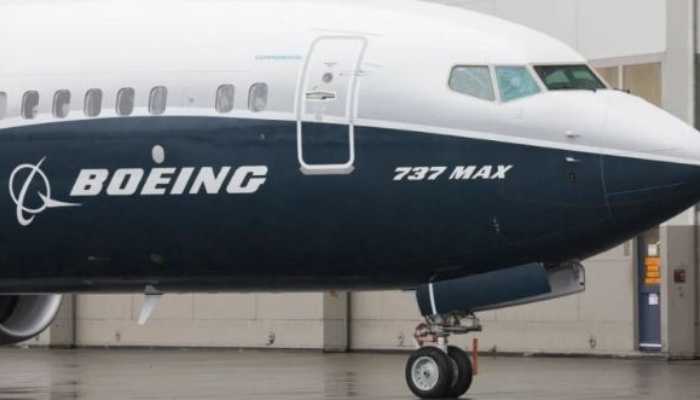
American aerospace giant, Boeing is shifting its strategy in Nigeria from just and aircraft seller to providing technical support locally for airlines and aviation service providers. The shift comes as domestic carriers aggressively upgrade their fleets to break out of regional boundaries and launch long-haul international routes.
The manufacturer is actively deploying engineering and flight personnel from the United States to Nigeria to conduct hands-on training workshops for local pilots and engineers. Beyond technical skill-building, Boeing’s strategic intervention includes network planning consultancies for expanding carriers and infrastructural engineering advisory services for local aviation agencies to modernize airport runways.
Significantly, the commercial landscape is shifting away from costly wet-lease arrangements (ACMI) toward highly profitable, asset-controlling dry leases and outright purchase.
This structural shift was highlighted by United Nigeria Airlines’ recent acquisition of two Boeing 737-800NG aircraft to support their domestic operations and their newly allocated international routes.
A wet lease provides an aircraft along with a complete crew, maintenance, and insurance (ACMI). In contrast, a dry lease provides only the aircraft itself, requiring the lessee to supply their own crew, maintenance, and insurance, and place the plane on their own Air Operator’s Certificate (AOC). The dry lease is more profitable for the airlines and allows them more control of the asset.
Further validating this narrow-body momentum, Air Peace recently secured the purchase of three Boeing 737-800 aircraft from South Korea’s Jeju Air. The deal is valued at 144.72 billion won (approximately $97.5 million), significantly expanding its current mainline fleet capacity.
Moore Ibekwe, executive sales director, Africa Region, Commercial Airplanes at Boeing, recently disclosed that Boeing is intentionally embedding itself in the local ecosystem to improve technical capacities.
“Our personnel have been coming to Nigeria from time to time to help airlines with their Boeing aircraft,” Ibekwe stated. “We have a team conducting workshops, basically helping with business plans and enhancing how airlines design their networks. We’ve also recently hosted leadership training in Nigeria.”
He added that the plan includes deploying Boeing’s experienced flight crew to work directly alongside local pilots to raise safety baselines.
“We do have an airports engineering capability group that will also be advising the Federal Airports Authority of Nigeria (FAAN) and the Nigerian Airspace Management Agency (NAMA) when it comes to developing and improving our runways and airport infrastructure,” Ibekwe said.
According to Boeing’s market forecasts, Africa will require roughly 1,200 new aircraft deliveries over the next two decades. Managing this massive influx of metal will require an estimated 77,000 highly trained aviation professionals across the continent—a metric driving Boeing’s decision to plant an early technical footprint inside Nigeria.
Before now, domestic airlines gradually shifted away from ordering or deploying large mainline models such as the Boeing 727, 747, 777, and Airbus A220-300.
Carriers are actively shifting to leaner regional platforms for their domestic and West African operations. Fleet deployments are now dominated by ERJ-145 hopper jets, CRJ-100/200/700/900 series, ATR 72 turboprops, and modern Embraer variants.
However, there appears to be a resurgence of Boeing aircraft, especially Boeing 737s, as Boeing offers incentives to woo domestic airlines who plan to operate international routes.
“Nigerian airlines are increasingly adopting the Boeing 737NG and Airbus A320 families to combat the skyrocketing Jet-A1 fuel costs and infrastructural bottlenecks.
“Nigerians travel with a lot of luggage, and because the payload-to-fuel burn ratio of smaller regional jets (like the CRJ and Embraer series) cannot sustain the high costs per block hour, airlines require higher-capacity narrow-body aircraft to maintain profitability,” Samuel Caulcrick, the former Rector of the Nigerian College of Aviation Technology (NCAT).
According to Caulcrick, the fixed operational costs of landing fees, navigation charges, and crew remain largely the same, making the cost-per-available-seat-mile (CASM) much higher for Embraers and CRJs.
“B737NGs offer the high payload/revenue potential needed to cover these fixed costs and mitigate the impact of soaring fuel prices,” Caulcrick explained.
Seyi Adewale, chief executive officer at Mainstream Cargo Limited, told BusinessDay that the airlines will surely prefer to use Boeing aircraft for international flights than smaller aircraft because of the bigger cargo bellies, higher number of passenger seats and their categories, more suitable for long haul flights and durability.
“Other reasons may include our airline operators are showing banks and investors that they are now more prudent, experienced in managing an airline, better credibility to repay loans or pay returns, and the recent support from the federal government via the Federal Ministry of Aviation with respect to reducing or eliminating prior limiting issues regarding insurance, aircraft leasing, and guarantees.”
Five local airlines, Air Peace, United Nigeria Airlines, Overland, ValueJet, and Ibom Air currently operate flights to the West coast driven by limited competition and the opportunity to earn foreign exchange.
West Coast routes being explored by local carriers, which have long been dominated by foreign airlines include Accra, Douala, Libreville, Bamako, Conakry, Banjul, Daka, Lome, Cotonou, and Niamey.
Local airlines are also eyeing international destinations. With Air Peace’s successful operations into London, the airline has secured approval from Brazil’s National Civil Aviation Agency (ANAC) to operate scheduled international air services to and from the South American country, marking another milestone in its drive to become a global carrier.
The airline has, since last year, applied to Canadian and United States authorities for landing permits to commence scheduled operations into Toronto and New York respectively, while also finalising plans to resume services to Jeddah, Saudi Arabia, and Guangzhou, China. The airline also concluded plans to commence three weekly flights to Manchester in the United Kingdom as it continues to expand its footprint across Africa, Europe, North America, the Middle East, the Caribbean and South America.
United Nigeria Airlines said it has received formal approval from the Nigerian government to launch long-haul international flights to destinations including New York, Canada, and Dubai.
Olumide Ohunayo, industry analyst and director of research at Zenith Travels, told BusinessDay that the choice of Boeing over the Airbus A320 for regional and international operations could be because the organisation offers them more cost-efficient operations with training, provision of spares locally, amongst others.
“These supports help cut major costs for the organisation. You see them move away from the costly wet lease era to the dry lease aircraft. The wet lease era made the owner of the aircraft rich, while those who use the aircraft are struggling with the bottom line. It is a good development and encouraging, Ohunayo said.