
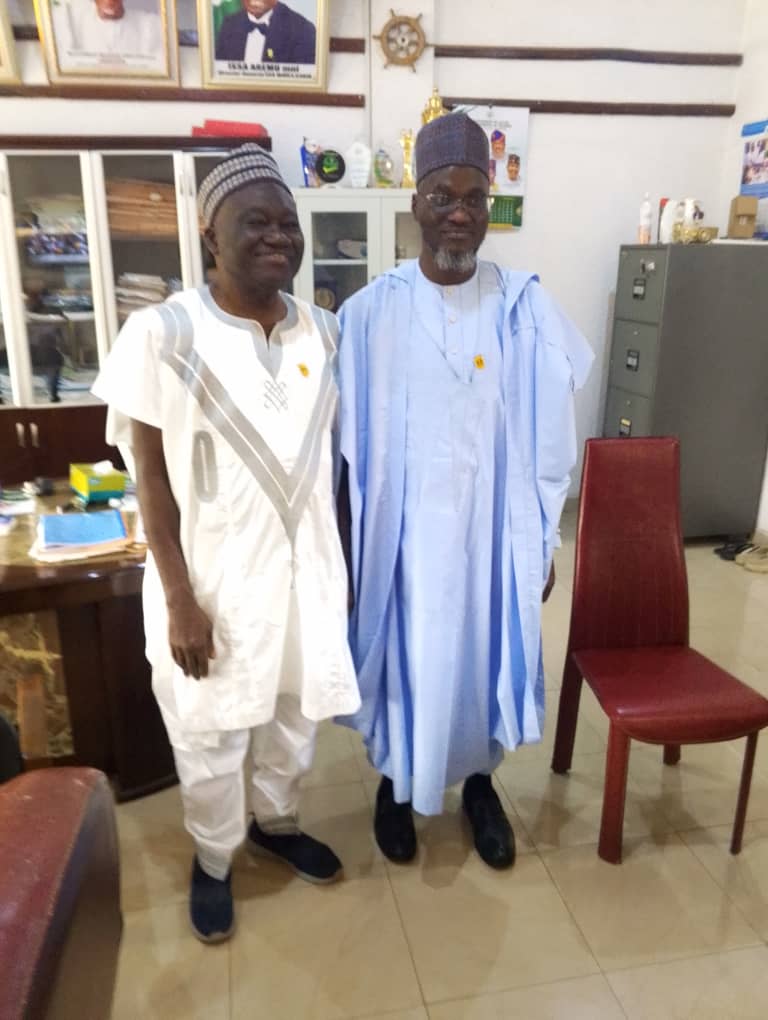
The Director-General of the Michael Imoudu National Institute for Labour Studies, Comrade Issa Aremu, has called on global leaders to return to diplomacy and reconciliation in resolving international conflicts, warning that the world risks sliding deeper into destructive wars if dialogue is abandoned.
Aremu spoke with journalists at the 5th Ramadan Lecture of the MINILS Muslim Community in Ilorin, where he reflected on ongoing crises in the Middle East and their implications for Africa and Nigeria.
According to him, recent events in the Middle East have reinforced the importance of patient diplomacy over retaliatory politics. He referenced former United States President Barack Obama, saying his approach to global conflict resolution demonstrated that restraint and negotiation often achieve more lasting peace than military confrontation.
“It may not always be popular to resist the temptation of tit-for-tat actions,” Aremu said. “But nation-building is not a popularity contest. Dialogue, negotiation and compromise remain the best options for any nation and indeed for the world.”
He lamented what he described as a “war of attrition” in parts of the Middle East, stressing that violence has turned once-thriving cities into theatres of destruction. He argued that conflicts rooted in power struggles, domination and resources would not deliver lasting solutions.
Drawing lessons from history, Aremu cited the example of Nelson Mandela, noting that reconciliation and forgiveness were central to South Africa’s transition from apartheid to democracy.
“There is no future without forgiveness and reconciliation,” he said. “We cannot replace one oppression with another. That will never work.”
He urged world leaders to show genuine leadership, adding that institutions such as the United Nations must be strengthened to prevent a repeat of the devastation that followed the Second World War.
Turning to Nigeria’s domestic politics, Aremu said recent elections in the Federal Capital Territory and some states have shown that reforms to the country’s electoral process are yielding results. He described the Electoral Act as “work in progress,” calling for continuous improvement and the effective deployment of technology, alongside contingency plans where technology fails.
“Elections are a means, not an end,” he stated. “The end is good governance. Beyond electing candidates, we must begin to focus more on programmes and policy issues that directly affect development.”
He stressed the need for what he termed “quality control” in Nigeria’s democracy, urging political actors to shift attention from mere electoral victories to substantive debates on power supply, security, education, healthcare and youth employment.
Aremu acknowledged improvements in some economic indicators, including external reserves and relative currency stability, but cautioned that such gains could be undermined by global shocks, particularly fluctuations in oil prices.
“Without peace and security, both locally and globally, no development is sustainable,” he said. “Nigeria has the potential to perform far better, but we must deliberately work for peace and focus on policies that improve the lives of our people.”
He concluded by reaffirming the institute’s commitment to democratic values, press freedom and freedom of association, noting that sustainable development can only thrive in an atmosphere of peace, dialogue and responsible leadership.