
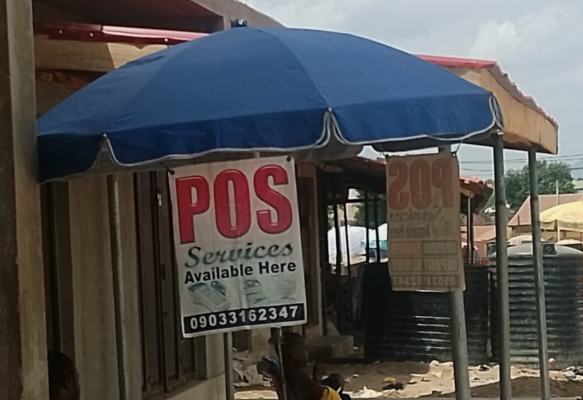
Residents seeking healthcare in public hospitals across satellite towns in Abuja have alleged persistent cash-only payment practices.
The allegations persist despite the federal government’s push for a cashless economy and increased adoption of electronic transaction platforms nationwide.
A survey found that some patients and caregivers at government-owned hospitals alleged they were required to pay cash for services, while some claimed receipts were not issued afterwards.
Some respondents further alleged that when cash was unavailable, they were directed to nearby point-of-sale operators or given private account details for transfers, raising concerns about accountability and transparency.
The development, according to affected patients, has inadvertently boosted patronage for PoS operators stationed around hospital premises, as relatives scramble to obtain cash needed for treatment and hospital-related expenses.
Halima Bature alleged that her relative’s emergency admission at Kubwa General Hospital exposed the challenge, as the family was reportedly required to make cash payments throughout the treatment process.
She said cash was allegedly demanded for obtaining a hospital card, conducting laboratory investigations and securing ward admission, leaving the family with limited alternatives during the medical emergency.
“All the staff we encountered that night insisted on cash payments. Even to obtain the hospital card, we paid cash. When we got to the lab to conduct tests, we paid cash; at the ward, before we were allocated a bed, we paid cash,” she alleged.
Mr Bature further claimed that after exhausting available cash, the family was provided a PoS machine for payment but discovered the account details were not linked to the hospital.
“When we complained, we were told that it was the only way to make payment if we wanted to be treated,” she said.
She also alleged that receipts were not issued for any of the payments made during the admission process, making it difficult to track the transactions afterwards.
At the Nigeria Customs Service Hospital, Karu, Odunayo Adebanji alleged that she spent about N66,000 during her son’s two-day admission and paid in cash. She alleged that despite the volume of payments made during treatment, no official receipts were issued to document the transactions or provide evidence of expenditure.
Tayo Akinyemi, another caregiver at the facility, alleged that he paid cash for an ear swab procedure and later paid N10,000 directly to the doctor for ear flushing.
“I was shocked that a hospital this big, which belongs to a reputable organisation like customs, would be operating like this. I was asked to go downstairs and use PoS to make withdrawals. On getting back downstairs, I discovered that there were so many PoS operators around, ready to give you whatever amount you required at a charge,” he said.
Mr Akinyemi said the experience left him questioning whether such payment practices were standard procedures at the facility or isolated incidents involving individual healthcare workers.
“I was told everything has to be in cash. It is totally unfair because it negates what the government is preaching about a cashless economy,” he said.
However, not all patients interviewed reported similar experiences, with some insisting that hospital payments were made through official channels and properly documented.
Glory Yamput, whose relative received treatment at the NCS Hospital, said she made payments through approved procedures and received receipts for all transactions.
At Bwari General Hospital, Vera Yunana alleged that she repeatedly resisted demands for cash payments when her sister-in-law was admitted for childbirth and related medical care. She alleged that hospital personnel initially requested N14,000 in cash and recorded the amount and purpose on a piece of carton instead.
Ms Yunana said that when she requested the hospital’s account details to facilitate a transfer, staff handling the admission process allegedly resisted. She further alleged that after doctors recommended a Caesarean section, the family was informed that an additional N78,000 would be required in cash.
According to her, she refused to pay in cash and insisted on obtaining an account number before proceeding with the required transaction. Ms Yunana alleged that a nurse and doctor eventually provided a private account number, which she believed was not officially linked to the hospital.
She further alleged that nurses on different shifts repeatedly requested between N1,000 and N3,000 in cash for drugs following the surgical procedure. According to her, the requests were not accompanied by written prescriptions or official receipts, and stopped only after the family indicated financial exhaustion.
She said attempts to report the matter to hospital management were unsuccessful, although she later heard that digital payment options had since been introduced.
Nevertheless, several other users of Bwari General Hospital stated they had never encountered demands to pay into private accounts or unofficial payment channels. Nurudeen Balogun, who was receiving treatment for tooth pain, said he had used the hospital several times without experiencing such requests.
Imam Mufutau Adewale, who brought an emergency patient to the facility on August 30, said treatment began immediately, with no payment demanded beforehand.
“A few days ago, I brought an emergency case here, and the patient was attended to thoroughly without even paying a dime. So I have never witnessed such a thing here,” he said.
Imam Olesin Abdulazeez also said he transferred funds directly into the hospital’s account and had never been asked to use a private account.
“I have never been asked to transfer money into a private account. However, there is no smoke without fire. I cannot say if such a thing had happened to some people, maybe in the night or whatever. I am only talking for myself,” he said.
Mercy John and Ihuoma Pearl, both patients at Kubwa General Hospital, similarly dismissed the allegations.
PoS operators, however, were seen around hospitals in Nyanya, Kubwa, Karu, Kuje and Bwari, recording significant patronage from patients and caregivers seeking cash.