
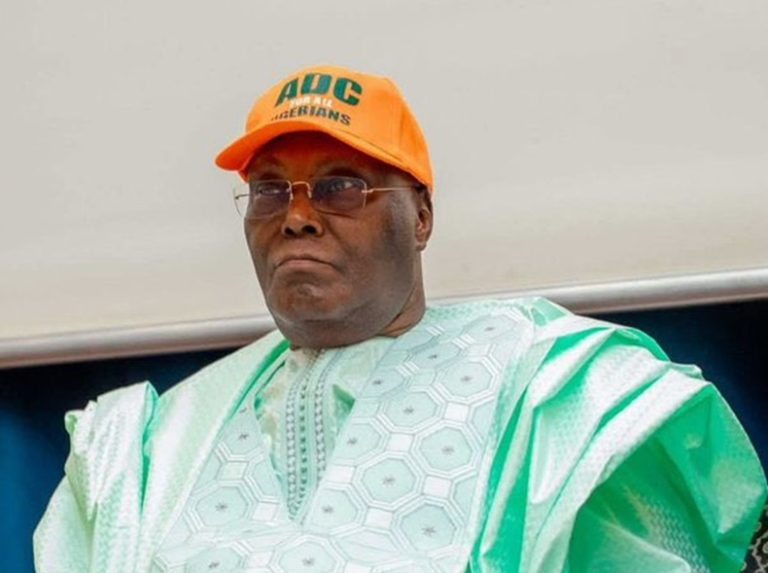
The absence of former Vice President and African Democratic Congress (ADC) presidential candidate, Atiku Abubakar, from Monday’s opposition summit in Abuja has been explained by his media aide, Phrank Shaibu, who said the former vice president remains committed to efforts to unite opposition forces ahead of the 2027 presidential election.
Shaibu said Atiku’s decision not to attend the meeting should not be interpreted as a rejection of the coalition initiative or an unwillingness to participate in negotiations aimed at producing a stronger opposition platform.
The clarification followed Atiku’s absence, alongside that of Nigeria Democratic Congress (NDC) presidential candidate Peter Obi, from a meeting where opposition parties began discussions on the possibility of presenting a common presidential candidate against the ruling All Progressives Congress (APC) in 2027.
The meeting, held at the Shehu Musa Yar’Adua Centre in Abuja, was organised by the G-100 political pressure group and attracted representatives from six opposition parties.
The parties represented included the ADC, Allied Peoples Movement (APM), NDC, Peoples Democratic Party (PDP), Peoples Redemption Party (PRP) and Social Democratic Party (SDP).
Among the prominent figures at the summit were PRP presidential candidate Donald Duke, SDP candidate Adewale Adebayo, Democratic Leadership Alliance candidate Moses Olusoji and APM vice-presidential candidate Lawan Daura.
Atiku’s absence not a boycott – aide
Speaking on his principal’s absence, Shaibu said Atiku remained firmly behind the broader objective of building a united opposition capable of challenging the APC.
He argued that the former vice president’s commitment should be judged by his position on opposition cooperation rather than his physical presence at one meeting.
Shaibu said Atiku’s absence was unavoidable and should not be deliberately portrayed as an attempt to undermine the summit.
According to him, Atiku believes Nigeria needs a broad and well-organised opposition capable of providing an alternative to the current administration.
Shaibu said the former vice president remained committed to efforts aimed at addressing what he described as hardship, insecurity and economic challenges under the Tinubu administration.
He added that Atiku’s support for opposition cooperation remained unchanged.
Why Atiku and Obi are watching from the sidelines
While Atiku’s camp has publicly backed the idea of opposition unity, a source familiar with the discussions suggested that both Atiku and Peter Obi were closely monitoring the process before deciding on their next steps.
The source said the timing of the G-100 initiative could create difficult negotiations because several opposition parties had already selected their presidential candidates for the 2027 election.
The biggest question, according to the source, is likely to be who would be prepared to abandon an existing presidential ambition if the coalition eventually decides to back a single candidate.
The source said Atiku supports legitimate efforts to defeat the APC but may be considering whether the coalition process started too late to make the negotiations straightforward.
The emergence of the G-100 after the various parties had already settled on their candidates, the source argued, means the alliance must overcome the difficult question of which aspirants would be willing to step aside.
The same source also addressed Peter Obi’s decision not to attend the summit, suggesting that his existing political arrangement with Rabiu Kwankwaso could make any decision to withdraw from the presidential race particularly difficult.
Obi is expected to face the challenge of balancing his own ambition and political commitments with the broader demand for opposition consolidation.
Also Read: Why Tinubu will win 2027 general elections – Duke
The source, however, expressed the possibility that Obi and Kwankwaso could participate in future discussions if they become convinced that the G-100 process is developing in a direction acceptable to them.
The implication is that Monday’s absence may not necessarily close the door on future negotiations.
Summit focused on building the framework
Meanwhile, the spokesman for the House of Representatives minority caucus, Afam Ogene, urged observers not to read too much into the absence of Atiku and Obi.
Ogene explained that the meeting was largely concerned with establishing the structures and procedures that would guide the proposed opposition alliance rather than making an immediate decision on who would become its presidential candidate.
He noted that party chairmen and other officials therefore played a central role in the initial discussions.
The development means the opposition coalition effort is still at an early stage, with major questions about leadership, candidate selection and power-sharing yet to be settled.
For now, Atiku’s camp says his absence should not be mistaken for disengagement. But with the 2027 election drawing closer and several presidential ambitions already firmly established, the real test for the opposition will be whether its leaders can turn calls for unity into concrete political concessions.