
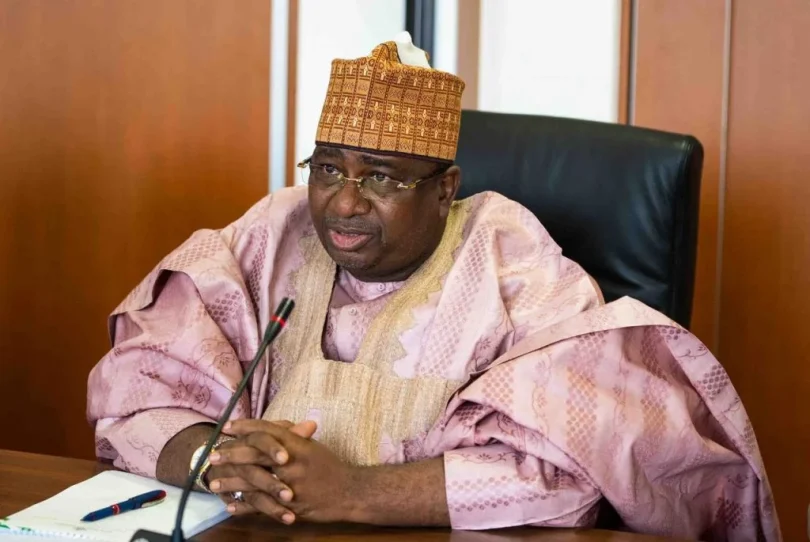
Kebbi State Government’s approval of a N10 billion loan to fund the 2026 Hajj pilgrimage has sparked national criticism, with social commentators questioning the state’s development priorities.
While thousands of children in Kebbi struggling with basic literacy and numeracy, Governor Nasir Idris’ administration moved to secure additional Hajj seats for residents, drawing sharp reactions from experts and civil society figures.
Sodiq Alabi, a social commentator, revealed that 95% of children aged 7–14 in Kebbi cannot read at Primary 2 or 3 level, while 94% cannot solve basic mathematics at the same level.
Alabi cited the 2024 National Demographic and Health Survey, NDHS, adding that 89.4% of adult women are illiterate, with an additional 6.4% able to read only part of a sentence.
“But at least the governor is providing loans for Hajj,” Alabi noted, using the remark to highlights what he described as a misalignment of state priorities.
Political commentator Mahdi Shehu also criticized the move, describing it as a “misplaced priority” in a state grappling with severe poverty and infrastructural decay. Posting on X, Shehu wrote:
“They deploy religious sentiment to hoodwink senile people. The same people who can’t afford to eat are given loans to go for pilgrimage.
In a state where poverty is at 75%, over 2 million children are out of school, hospitals and schools are dilapidated, roads are poor, clean drinking water is lacking, gratuities are unpaid, youth unemployment is high, children learn on the floor, essential drugs are unavailable, and primary health centres have collapsed, this is pure madness and illiteracy.”
DAILY POST gathered that the criticism follows the state’s grim literacy and education statistics, which reveal a population struggling with basic learning and numeracy skills.
Observers argue that while schools, healthcare facilities, and essential infrastructure remain underfunded, the decision to approve a multi-billion-naira Hajj loan raises serious questions about governance priorities and the allocation of public resources.
However, the Kebbi State Government defended the loan, saying it was necessary to secure 1,300 additional Hajj seats for its citizens and meet the December 5 deadline set by the National Hajj Commission of Nigeria, NAHCON.
Alhaji Faruku Aliyu-Yaro, Chairman of the State Pilgrims Welfare Agency, told journalists in Birnin Kebbi that the loan was a “decisive, compassionate, and people-centred intervention” by Governor Idris.
He explained that without the loan, the state risked losing hundreds of Hajj seats.
While the state government framed the loan as a humanitarian and religious intervention, critics insist it highlights the urgent need to prioritize education, poverty reduction, and basic infrastructure development in Kebbi.