
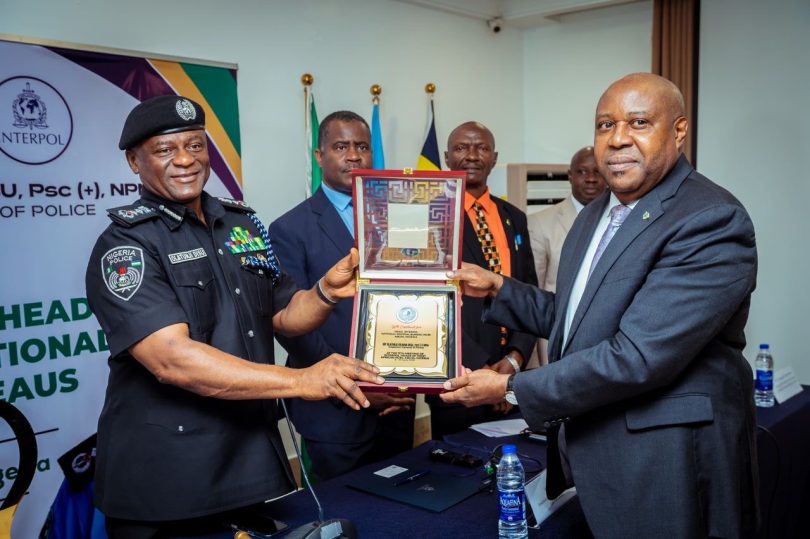
The call was made on Monday during the 11th Meeting of Heads of INTERPOL National Central Bureaus (NCBs) for West Africa, held at Johnwood Hotel in Abuja.
This was revealed in a statement by Force Public Relations Officer, DCP Anthony Okon Placid, on Monday, 8th June 2026.
The meeting brought together heads of INTERPOL National Central Bureaus from 16 West African countries, alongside senior officials from the INTERPOL General Secretariat and other regional security organisations.
Addressing participants, the IGP highlighted the growing security threats facing the sub-region, noting that criminal networks involved in human trafficking, arms smuggling, drug trafficking, cybercrime, money laundering, terrorism financing and violent extremism operate across borders with little regard for national boundaries.
He stressed that no country could effectively confront such threats alone, adding that success would depend on the strength of cooperation and intelligence-sharing among member states.
Speaking on Nigeria’s efforts, Disu outlined several initiatives already being implemented to strengthen regional security. He said the Nigeria Police Force is expanding INTERPOL’s I-24/7 secure communication network to border posts and law enforcement institutions nationwide, enabling officers at various locations to access critical intelligence in real time.
The police chief also reaffirmed Nigeria’s commitment to Project GEMINI, which focuses on the verification and uploading of records into INTERPOL’s Stolen and Lost Travel Documents database. He further cited the West African Police Information System (WAPIS) as an example of the benefits of regional data integration.
Looking ahead, Disu identified three major priorities for Nigeria: expanding access to INTERPOL databases across West African border points, establishing mechanisms that allow security agencies to coordinate joint operations within hours rather than weeks, and strengthening trust among National Central Bureaus to facilitate effective information sharing.
According to him, the success of regional security efforts depends largely on transparency and mutual confidence among participating agencies.
The head of the INTERPOL delegation commended Nigeria for hosting the meeting and noted that the attendance of all 16 NCB heads demonstrated a shared commitment to regional security cooperation.
He urged participants to move beyond discussions and adopt measurable commitments capable of improving security outcomes, while encouraging law enforcement agencies to focus on preventing and disrupting criminal activities before they occur rather than merely responding after the damage has been done.
The meeting underscored Nigeria’s central role in regional security cooperation and highlighted the growing emphasis on collective action in addressing modern security challenges across West Africa.